


How Does Liquid Facelift Address Sunken Temples?
.jpg/v1/fill/w_320,h_320/file.jpg)
Temple hollowing can make the upper face appear more skeletal, tired, or aged, particularly when the loss of volume becomes noticeable around the sides of the forehead. A Liquid Facelift in Dubai can address sunken temples by restoring lost volume with carefully selected dermal fillers. By replacing some of the lost soft-tissue volume, a liquid facelift can create a smoother transition between the temples, forehead, cheeks, and other facial features. Recent clinical research has found that hyaluronic acid fillers can significantly improve the appearance of temple hollowing and maintain aesthetic improvement during follow-up.
What Causes Sunken Temples?
Sunken temples are commonly associated with changes in facial volume that occur with aging.
The temporal region contains several layers of soft tissue, including fat compartments and connective tissues. As these structures change over time, the temples may lose some of their fullness.
Age-related changes are not the only possible cause. Weight loss, naturally low facial volume, and individual facial anatomy can also contribute to hollow-looking temples.
When volume decreases, the bony contours around the temporal area can become more visible, creating a more hollow or angular appearance.
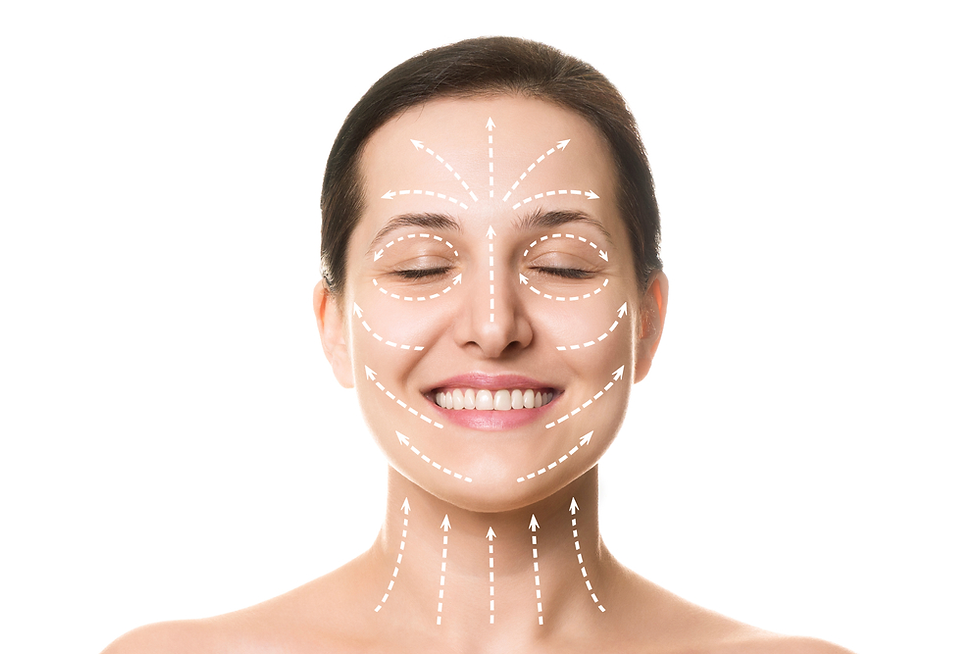
How Does a Liquid Facelift Restore Temple Volume?
A liquid facelift can restore volume by placing dermal filler into carefully selected areas of the temples.
Hyaluronic acid is one type of filler that has been studied for correcting temporal hollowing. Clinical research has demonstrated improvements in temple volume, hollowing scores, and overall aesthetic appearance following treatment.
The objective is not simply to fill the depression. The practitioner must consider how the temples relate to the forehead, cheeks, eyebrows, and overall facial shape.
This allows the treatment to focus on restoring proportion rather than creating excessive fullness.
Can Temple Filler Make the Face Look Younger?
Sunken temples can contribute to an aged or gaunt facial appearance.
Restoring some of the lost volume may soften this effect and create a fuller, smoother transition around the upper face.
A 2025 randomized controlled trial found that hyaluronic acid treatment for temple hollowing produced significant aesthetic improvement and increased patient satisfaction, with treatment effects remaining evident through more than a year of follow-up.
However, results vary between individuals, and filler cannot reverse every aspect of facial aging.
Can It Improve Facial Proportions?
Yes. The temples are part of the overall facial framework, so changes in this area can influence how the entire face appears.
When the temples become hollow, the upper face may look narrower or more angular. Restoring appropriate volume can create a smoother transition between the forehead and midface.
This is particularly important when a liquid facelift involves more than one facial area. The practitioner may evaluate the temples together with the cheeks, chin, jawline, and other areas to maintain overall balance.
The American Society of Plastic Surgeons notes that liquid facelift treatments can be customized to address concerns such as temple volume loss, cheek volume loss, and other signs of facial aging.
How Is Temple Treatment Customized?
Not every person has the same degree or pattern of temple hollowing.
During an assessment, a qualified practitioner may consider:
The depth of the temple hollow
Facial symmetry
Existing facial volume
Forehead shape
Cheek volume
Skin thickness
Age-related changes
Overall facial proportions
The desired level of correction
Some people may need only subtle volume restoration, while more pronounced hollowing may require a more comprehensive treatment plan.
The amount and placement of filler should therefore be determined individually rather than following a standard formula.
Can Liquid Facelift Treat Both Temples?
Temple hollowing can occur on both sides, but the degree of volume loss may not always be identical.
One side may appear slightly more hollow than the other because facial asymmetry is common.
A practitioner can assess both sides separately and adjust the treatment accordingly. Treating each temple according to its individual anatomy can help create a more balanced appearance.
Symmetry does not necessarily mean making both sides identical. The goal is generally to create a visually harmonious result.
Can Temple Filler Improve a Gaunt Appearance?
Yes, restoring lost temple volume may soften a gaunt appearance when hollowing is caused by volume loss.
A sunken temporal region can make the bony structures around the forehead and upper face appear more prominent.
Adding controlled volume can reduce the depth of the hollow and create a softer transition.
A systematic review of nonsurgical temple volumization found improvements in temple hollowing, overall aesthetic appearance, and patient satisfaction across the available literature.
Can It Be Combined With Other Liquid Facelift Areas?
Temple treatment can be part of a broader liquid facelift when other areas also show volume loss.
Depending on the individual assessment, treatment may involve areas such as:
Temples
Cheeks
Under-eye region
Lips
Chin
Jawline
Lower face
Combining treatments does not mean every area needs filler. The purpose of a comprehensive assessment is to identify which areas actually require enhancement.
A balanced approach can help avoid over-treatment and maintain the person's natural facial characteristics.
Does Temple Filler Improve Skin Quality?
The primary purpose of temple filler is volume restoration rather than direct skin rejuvenation.
By restoring underlying volume, however, the skin and soft tissue may appear smoother over the treated area.
This should not be confused with treatments specifically designed to improve pigmentation, fine lines, skin texture, or collagen production.
If multiple skin concerns are present, different treatments may be considered as part of a broader aesthetic plan.
Can Results Look Natural?
Temple enhancement can look natural when the amount and placement of filler are appropriate for the individual's anatomy.
Overfilling the temples may produce an overly rounded or swollen appearance. A conservative approach can instead focus on gradually restoring the missing volume.
The practitioner should also consider the transition between the temple and adjacent areas rather than treating the hollow as an isolated depression.
The goal is usually to make the face look refreshed and balanced rather than obviously treated.
How Long Can Temple Filler Results Last?
The duration depends on the specific filler, amount used, injection technique, treatment area, and individual response.
Clinical studies have shown that certain hyaluronic acid fillers can maintain measurable improvement in temple hollowing for 12 months or longer.
This does not mean that every patient will experience the same duration.
Over time, the filler is gradually metabolized, and maintenance treatment may be considered if the person wants to preserve the correction.
Is Temple Filler Safe?
Temple filler requires particular anatomical knowledge because the temporal region contains important blood vessels and nerves.
Research emphasizes that safe treatment depends on understanding the multiple tissue layers and vascular anatomy of the temple. Serious vascular complications, including vision-threatening events, are possible with facial filler injections, making appropriate training and technique especially important in this area.
Temporary effects such as swelling, tenderness, bruising, or pressure can also occur. A systematic review identified pain or tenderness, bruising, and swelling among the more common post-treatment effects.
For this reason, temple filler should be performed by an appropriately qualified and experienced medical professional.
What Should You Expect After Treatment?
The temples may appear fuller immediately after treatment, but early swelling can temporarily affect the appearance.
Possible short-term effects include:
Mild swelling
Bruising
Tenderness
Redness
Pressure or tightness
Temporary sensitivity
These effects generally improve as the treated area settles.
Patients should follow the specific aftercare instructions provided by their practitioner and avoid judging the final appearance immediately after injection.
Who May Benefit From Temple Volume Restoration?
Temple filler may be considered for people concerned about:
Sunken or hollow temples
Age-related volume loss
A gaunt upper-face appearance
Prominent temporal contours
Uneven temple volume
Changes following weight loss
Loss of youthful facial fullness
It may not be appropriate for everyone. The cause of the hollowing, facial anatomy, previous filler treatments, skin condition, and overall health should be assessed before treatment.
What Are the Limitations of a Liquid Facelift for Sunken Temples?
A liquid facelift can restore soft-tissue volume, but it cannot permanently change the underlying bone structure.
It also does not stop the natural aging process.
If someone has significant skin laxity or multiple advanced signs of aging, treating the temples alone may not provide the desired overall result.
In these situations, a practitioner may recommend a broader treatment plan or discuss whether surgical options would be more appropriate.
Conclusion
A liquid facelift can address sunken temples by restoring lost soft-tissue volume with carefully placed dermal filler. This may soften a hollow or gaunt appearance and create a smoother transition between the temples, forehead, and midface.
The treatment should be highly individualized because the temporal region has complex anatomy and important blood vessels and nerves. Proper assessment, appropriate product selection, and precise injection technique are essential for achieving a balanced result while minimizing risks.
Temple filler can be used as an individual treatment or as part of a broader liquid facelift when volume loss affects several areas of the face. The most suitable approach depends on the person's anatomy, degree of volume loss, skin condition, and aesthetic goals.
Frequently Asked Questions
Can a liquid facelift fill sunken temples?
Yes. Dermal fillers, particularly hyaluronic acid fillers, can restore volume to hollow temples and improve their appearance.
Why do temples become sunken with age?
Age-related changes in facial soft tissue and volume can make the temples appear hollow. Genetics, weight loss, and naturally low facial volume can also contribute.
Can temple filler make the face look fuller?
Yes. Restoring lost volume can make the upper face appear less hollow and create a softer transition between facial features.
Can both temples be treated at the same time?
Yes, both temples can be assessed and treated during the same appointment when appropriate. Each side may require a different amount depending on individual anatomy and asymmetry.
How long does temple filler last?
Results vary, but clinical studies have reported improvement lasting 12 months or longer with certain hyaluronic acid fillers.
Does temple filler permanently remove hollowness?
No. Dermal fillers are temporary treatments and do not stop future age-related volume changes.
Can temple filler be part of a liquid facelift?
Yes. Temple volume restoration can be combined with treatment of other areas, such as the cheeks, chin, lips, or jawline, when these areas also require enhancement.
Is temple filler safe?
Temple filler can have risks because of the complex blood-vessel and nerve anatomy in the area. It should be performed by a qualified medical professional with appropriate knowledge and experience in facial filler injections.


Comments